


 INA
INA
Astigmatism Signs: Recognize the Symptoms & How to Treat Them
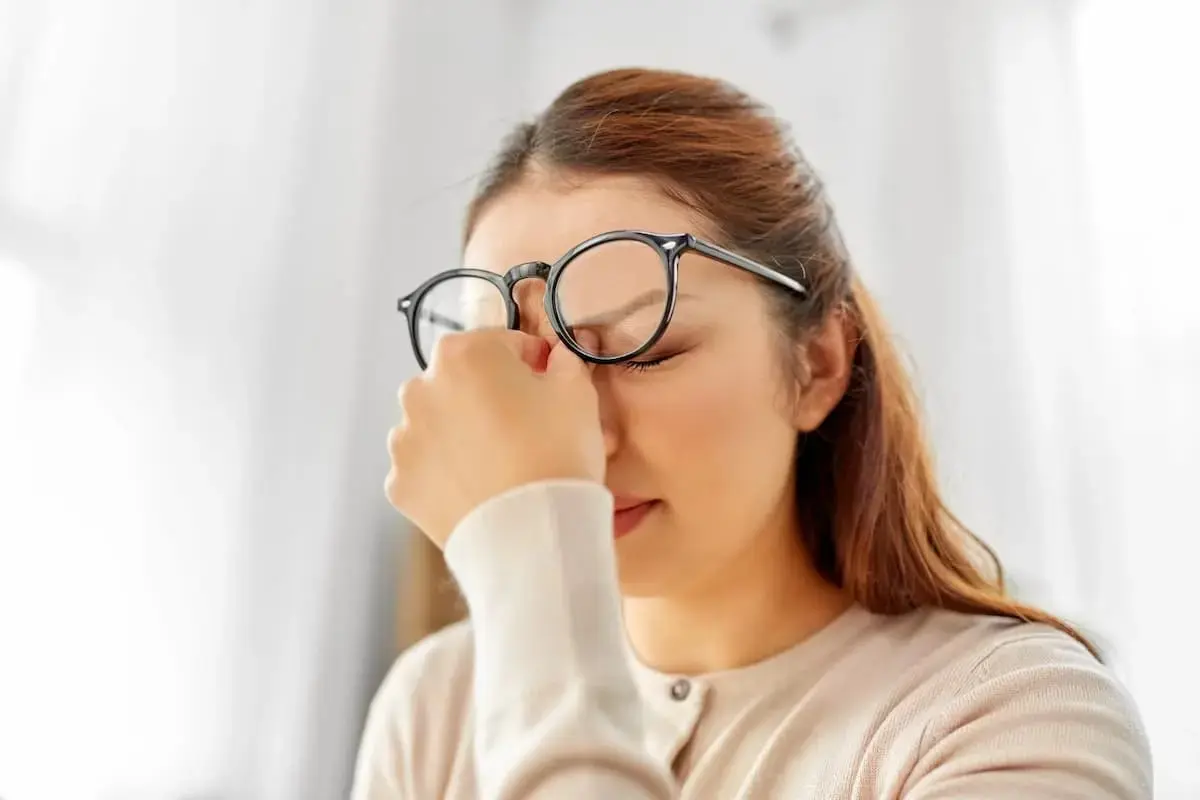
Why does text look blurry even though you are wearing glasses? If you experience this problem, one possible cause is astigmatism.
Astigmatism is a refractive error that can cause blurry, distorted, or out-of-focus vision, whether you are looking at objects up close or far away. Unfortunately, the signs of astigmatism are often not recognized early because the symptoms can develop gradually and are frequently mistaken for ordinary eye strain.
Therefore, familiarize yourself with the astigmatism signs below so you can seek proper treatment promptly.
What Does Astigmatism Look Like?
In a normal eye, the cornea and lens are round and uniformly curved. This shape helps light entering the eye focus precisely on the retina, the part of the eye responsible for capturing images. Because the light falls directly on the retina, vision is clear and sharp.
However, in people with astigmatism, the cornea or lens is not perfectly curved. As a result, light entering the eye is not properly refracted, so the focal point of the light does not fall precisely on the retina.
Some light may fall in front of the retina, while some may fall behind it. This is what causes vision to appear blurry or hazy, whether looking at objects up close or at a distance.
Additionally, astigmatism can occur alongside other refractive errors, such as nearsightedness (myopia) and farsightedness (hyperopia).
Astigmatism Signs to Watch Out For
Astigmatism symptoms may develop gradually, so many people are unaware of their condition at first. Complaints are usually felt only when vision becomes increasingly blurry and begins to interfere with activities such as reading, working, or driving.
According to a scientific source published in the National Library of Medicine (2023), the following are some astigmatism signs to watch for:
1. Impaired Visual Quality
One of the main symptoms of astigmatism is impaired visual quality. As explained earlier, astigmatism can affect vision because light does not fall precisely on the retina. As a result, patients may experience:
- Blurred or shadowy vision: Vision appears blurry or unfocused, whether looking at objects up close or at a distance.
- Distorted vision: Objects may appear elongated, tilted, or disproportionate.
- Difficulty seeing details clearly: People with astigmatism may have trouble reading small print, recognizing faces from a distance, or seeing traffic signs clearly while driving.
- Sensitivity to light (mild photophobia), especially when driving at night.
- Difficulty seeing at night, including the appearance of halos or flares around lights.
2. Symptoms of Eye Strain (Asthenopia)
When someone has uncorrected astigmatism, for example, if they do not wear glasses or contact lenses with the appropriate prescription, the eyes constantly struggle to focus on images that appear blurry.
To do this, the muscles inside the eye, particularly the ciliary muscles, must work harder and continuously accommodate to achieve clearer vision.
If this condition persists over a long period, the eye muscles can become fatigued. This then triggers asthenopia, a condition characterized by eye fatigue that may be accompanied by discomfort, soreness around the eyes, nausea, and even headaches.
3. Behavioral Changes
In addition to vision problems and eye fatigue, astigmatism can also trigger certain behaviors in those affected. The following are common behavioral changes experienced by people with astigmatism:
- Squinting: People often unconsciously squint their eyelids to help focus their vision.
- Tilting the head: Changing position or tilting the head while trying to see an object more clearly.
- Bringing objects closer: Holding a book, phone, or other object very close to the eyes to make it easier to read.
Recognizing Astigmatism Signs in Children
Astigmatism in children is often difficult to recognize because they usually cannot describe the vision problems they are experiencing. A child may simply squint, sit too close to the television, have trouble seeing the blackboard from a distance, or complain of dizziness without knowing the cause.
Therefore, regular eye exams for children are crucial. If a doctor detects astigmatism or other vision problems, the child will receive appropriate treatment promptly to prevent interference with their learning process or visual development.
What Are the Signs of Worsening Astigmatism?
Astigmatism can change or worsen over time. This condition is typically marked by vision complaints that increasingly interfere with daily activities. Some signs that astigmatism is worsening include:
- Vision becomes increasingly blurry or hazy, even while wearing glasses.
- Straight lines appear increasingly unclear, slanted, or distorted.
- Eyes tire more quickly when reading or staring at a screen.
- Frequently squinting to see more clearly.
- Complaints of dizziness or headaches occur more frequently, especially after intense eye use.
- Difficulty seeing comfortably at night, for example, while driving.
Differences Between Astigmatism and Myopia
Many people assume that astigmatism and myopia are the same condition because both cause blurred vision. In fact, they have distinct characteristics, such as:
That concludes the information on the astigmatism signs that you should be aware of. Detecting vision problems early, whether in yourself or in children, is the first step toward maintaining quality of life and productivity.
One highly effective treatment for astigmatism is the LASIK procedure. This procedure aims to reshape the cornea so that light can be focused more precisely onto the retina, resulting in clearer vision.
To support these efforts, JEC Eye Hospitals and Clinics offers LASIK services utilizing femtosecond laser technology, designed to make vision correction procedures more precise and minimally invasive.
As a result, the procedure can be performed with greater accuracy, enhancing patient comfort and facilitating a smoother recovery.
Read also: How to Reduce Myopia and Astigmatism: Understanding and Treating These Eye Conditions
