

 INA
INA
What Is Presbyond? A LASIK Procedure for Presbyopia
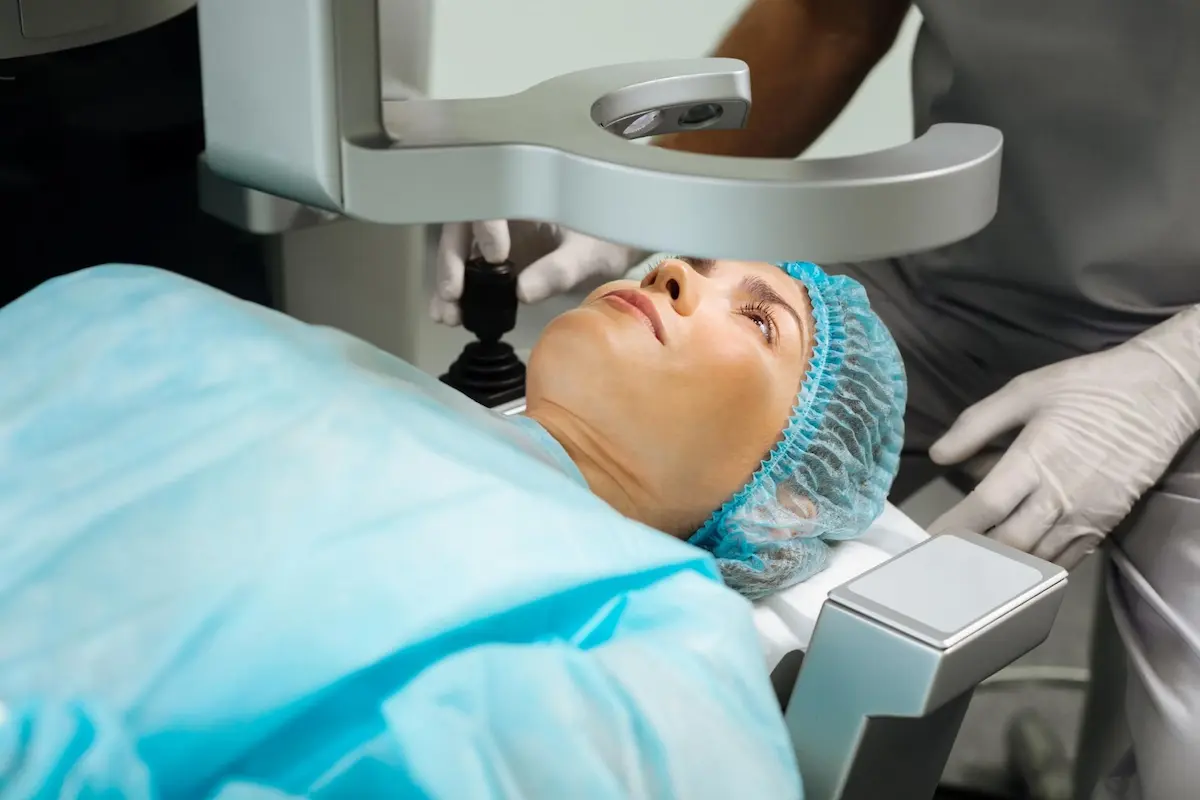
LASIK (Laser-Assisted In-Situ Keratomileusis) is an eye surgery procedure that uses a laser and has been widely used to treat refractive vision disturbances such as nearsightedness (myopia), farsightedness (hyperopia), astigmatism, and age-related vision (presbyopia). There are several LASIK technologies that offer different methods and purposes, one of which is Presbyond.
LASIK Presbyond is a laser procedure designed to treat presbyopia, or age-related vision loss. This article covers various aspects of Presbyond, from its effectiveness to how it works. Check out more below.
What Is Presbyond?
Presbyond is a more advanced laser-blended vision technology used to treat presbyopia, or age-related vision loss. Presbyopia is a natural condition that usually begins after the age of 40, in which a person experiences reduced vision and has difficulty seeing close-up objects.
According to a study from the National Library of Medicine (2022), unlike conventional LASIK, Presbyond does not correct only one type of vision. This technology “trains” both eyes to work together:
- One eye is optimized for distance vision.
- The other eye is optimized for near vision.
- The brain then combines the two images so that vision still feels natural.
This method is a development of the older monovision technique, but with smoother and more comfortable results for patients.
Presbyond is an effective and safe alternative for treating presbyopia. The study reported that patients’ distance and near vision improved after the Presbyond surgery.
The Purpose of Presbyond
Presbyopia causes people to have difficulty seeing close-up objects, so they need reading glasses. In this case, Presbyond LASIK is performed to enable patients to see distant, intermediate, and near objects clearly.
As a result, they can reduce their dependence on reading glasses. This allows patients to carry out daily activities more comfortably and with greater freedom.
Who Can Undergo Presbyond?
Although Presbyond offers significant benefits, not everyone is eligible for the procedure. The candidates for Presbyond LASIK are as follows:
- Patients who have recently developed presbyopia (ages 40–55): This group is considered ideal because the eye’s lens is still clear and vision disturbances are relatively mild.
- Patients with stable eye conditions: Their prescription (nearsightedness/farsightedness) has not changed significantly for some time.
- Patients who have undergone cataract surgery (pseudophakia): Especially those who have monofocal artificial lenses. In some cases, they may still be considered to improve near- and intermediate-vision quality.
Who Is Not Recommended to Undergo Presbyond?
Certain conditions may be contraindications for the Presbyond procedure, meaning it is not recommended because it could potentially harm the patient. The following are conditions in which patients are advised not to undergo Presbyond:
- A cornea that is too thin or at risk of keratoconus (an abnormal corneal shape).
- The history of corneal surgery has resulted in an uneven corneal surface.
- Other eye diseases, such as uncontrolled glaucoma or retinal and macular disorders (maculopathy), which can reduce vision quality and affect contrast sensitivity.
- Age above 60 years. At this age, other options such as lens surgery are often considered more appropriate.
Read also: 7 Types of LASIK Eyes You Need to Know
How Presbyond Works
Presbyond uses blended vision laser technology, allowing for a wider range of focus.
This procedure works by:
- One eye (the dominant eye) is adjusted to see distance clearly.
- The other eye is optimized for near vision.
In addition, the laser also increases the depth of focus in both eyes. The brain then combines the two images so that vision feels more natural, whether viewing far distances, intermediate ranges (such as a computer screen), or close objects.
The Procedure of Presbyond
The Presbyond procedure is divided into several stages, from preparation to post-procedure care. The following are the details of each stage.
Presbyond Preparation
Before the procedure begins, the doctor determines the patient’s dominant eye through specific tests. One commonly used test is the Miles test. The steps are as follows:
- Focus on a distant object.
- View the object through a small opening made by hand.
- Close one eye to determine which eye is able to see the object.
This test helps the doctor determine the appropriate correction strategy.
Presbyond Procedure
After the dominant eye has been determined, the doctor begins the procedure with the following steps:
- The eye doctor applies anesthetic eye drops to eliminate pain during the procedure.
- To prevent blinking, the doctor inserts a speculum to keep the eyelids open, keeping the eye stable.
- The doctor then creates a corneal flap using a laser or a microkeratome and carefully lifts it.
- During this process, the patient needs to focus on a specific light point so the eye stays steady and does not move.
- The doctor then reshapes the cornea using a laser so that light can be properly focused onto the retina.
- After that, the doctor repositions the flap back to its original place.
- The flap naturally adheres and does not require stitches.
Post-Presbyond Procedure
After the procedure, patients are usually required to wear eye protection while sleeping for several days to prevent friction or accidental injury.
The doctor will also recommend that patients rest and avoid strenuous activities to ensure optimal recover.
That concludes the information on Presbyond. This technology is presented as a solution for those who want to see clearly again without constantly relying on reading glasses.
With precise laser technology, Presbyond offers greater comfort for the eyes in adapting, allowing quality of life and productivity to remain optimal.
Therefore, if you or your loved one is experiencing vision disturbances due to presbyopia, you should consult an ophthalmologist for appropriate treatment.
You may consider JEC Eye Hospitals and Clinics, which provides LASIK services. The doctor will thoroughly evaluate your eye condition, including assessing whether technologies such as Presbyond are the right solution for your needs. With proper treatment, you can enjoy clear vision in old age.
